

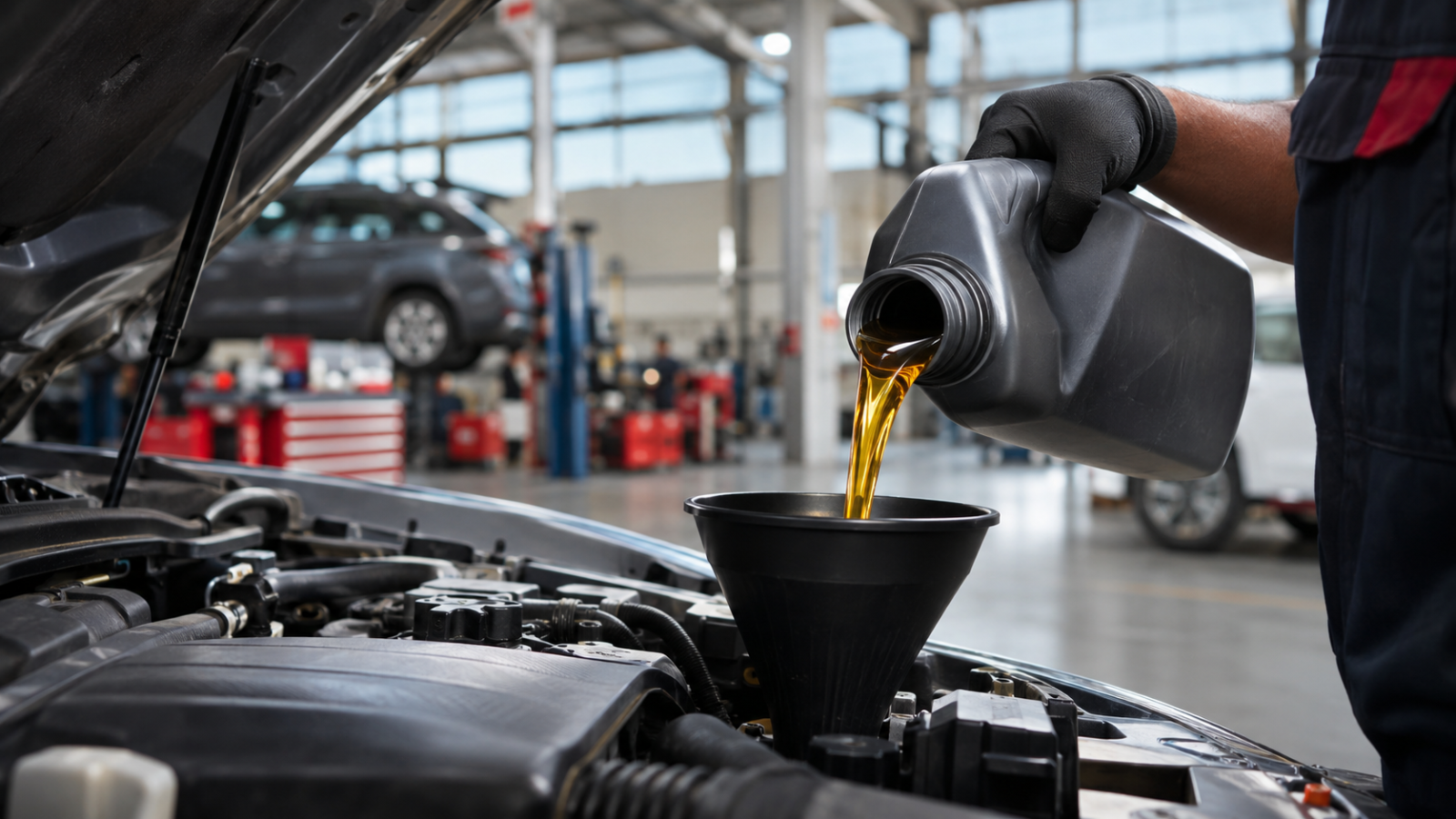
For decades, Saudi motorists have been advised to change their engine oil every 5,000 kilometres. But with advances in automotive technology, is this recommendation still relevant, or are motorists spending more than they need to?
Walk into several quick-service workshops in Saudi Arabia, and you may receive different recommendations. Some suggest changing the oil every 5,000 kilometres, while others recommend 10,000 kilometres or more.
So, who is right?
The answer depends on the vehicle, its engine technology and the conditions under which it operates.
What Saudi Authorities Say
In November 2022, the Saudi Standards, Metrology and Quality Organization (SASO) rejected widely circulated claims suggesting that engine oils available in Saudi Arabia were unsuitable for use over 10,000 kilometres.
SASO emphasised that oil change intervals should follow vehicle manufacturers’ recommendations, taking into consideration factors such as:
- Engine technology and condition.
- Driving habits.
- Environmental temperatures.
- Lubricant and fuel quality.
- Oil filter quality.
This challenges the assumption that every vehicle operating in Saudi Arabia automatically requires an oil change every 5,000 kilometres.
What Do Vehicle Manufacturers Recommend?
Modern vehicle manufacturers generally distinguish between normal and severe operating conditions.
Examples from selected manufacturer maintenance schedules include:
| Manufacturer | Normal Conditions | Severe Conditions |
|---|---|---|
| Toyota | 10,000 km | 5,000 km |
| Kia | 10,000 km | 5,000 km |
| Hyundai | 10,000 km | Model-dependent |
Both 5,000 km and 10,000 km can therefore be legitimate recommendations. However, these examples are not universal across every model and engine.
The correct interval is the one specified in your vehicle’s regional owner’s manual, including applicable time limits.
Does Saudi Arabia’s Climate Make a Difference?
Saudi Arabia’s high temperatures, dusty environments and heavy urban traffic can place additional demands on vehicle engines.
However, temperature alone does not determine the correct maintenance interval.
Manufacturers may classify the following as severe operating conditions:
- Frequent short journeys.
- Extended engine idling.
- Heavy stop-and-go traffic.
- Regular driving in dusty environments.
- Off-road driving and towing.
- Commercial and delivery vehicle operations.
A motorist regularly travelling between Jeddah and Madinah may subject their engine to very different operating conditions compared with a delivery driver spending several hours in congested city traffic.
Both operate in the same climate, but their maintenance requirements may differ.
Same Mileage, Four Times the Engine Hours
One of the most overlooked factors in vehicle maintenance is engine operating time.
Consider two hypothetical vehicles travelling exactly 5,000 kilometres.
| Driving Conditions | Highway | Urban |
|---|---|---|
| Distance travelled | 5,000 km | 5,000 km |
| Average speed | 100 km/h | 25 km/h |
| Engine operating hours | 50 | 200 |

Despite travelling the same distance, the urban-driven vehicle accumulates four times as many operating hours.
Extended stationary idling, particularly when running the air conditioning during Saudi summers, can increase engine operating time even further.
This helps explain why mileage alone does not always tell the complete story.
How Much Could Unnecessary Oil Changes Be Costing You?
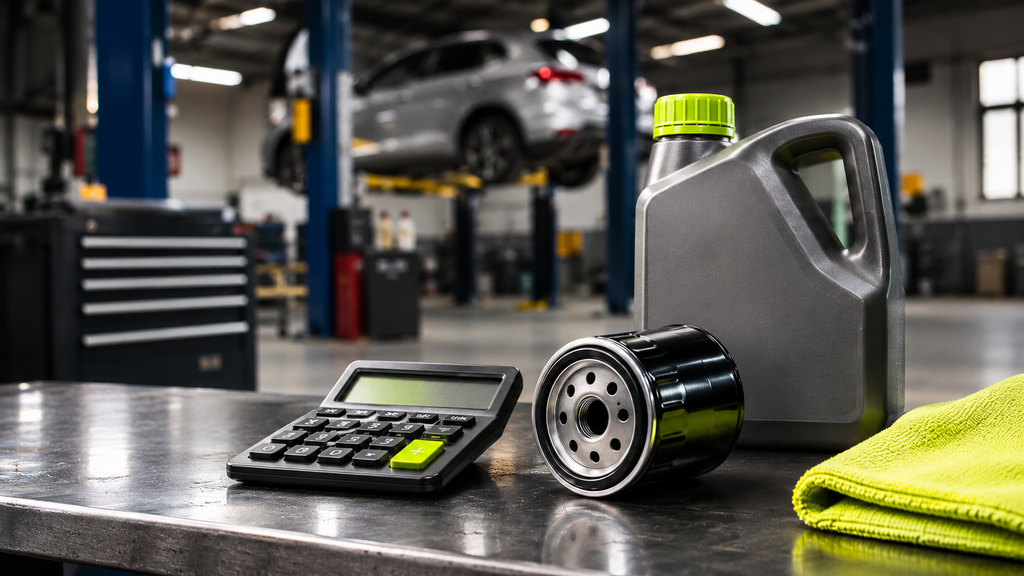
Consider a vehicle travelling 20,000 kilometres annually, with each oil and filter replacement costing SAR 250.
| 5,000 km Interval | 10,000 km Interval | |
|---|---|---|
| Annual oil changes | 4 | 2 |
| Annual expenditure | SAR 1,000 | SAR 500 |
| Five-year expenditure | SAR 5,000 | SAR 2,500 |
The potential difference is SAR 2,500 per vehicle over five years, provided the manufacturer approves the longer interval for the vehicle’s operating conditions.
For households with multiple vehicles and businesses operating commercial fleets, the financial implications can be significantly greater.
Premature oil replacement also produces unnecessary waste oil, used filters and packaging.
Preventive Maintenance or Unnecessary Upselling?
Workshops play an important role in keeping vehicles reliable and roadworthy.
However, when a workshop recommends an interval shorter than the manufacturer’s schedule, motorists should ask for the technical reasoning behind that recommendation.
Is it based on severe driving conditions, engine condition, lubricant specifications or simply a standard workshop policy?
A credible service provider should be able to explain the difference.
The MASAR Verdict
The 5,000 km oil change interval is not necessarily a myth. For certain vehicles and operating conditions, it remains a valid maintenance requirement.
The real myth is believing that every vehicle in Saudi Arabia requires the same oil change interval.
Responsible maintenance is not about changing engine oil as frequently as possible. It is about changing the right oil, at the right time, for the right reasons.
Your engine does not read the sticker on your windscreen. Neither should that sticker be your only source of maintenance advice.
MASAR UNFILTERED | The Automotive Magazine
Separating Automotive Facts from Marketing Claims.
Sources: SASO, Toyota Saudi Arabia, Kia maintenance guidance and Hyundai owner’s manuals.
Financial calculations are illustrative. Always follow the maintenance requirements applicable to your specific vehicle.




Leave a Reply