
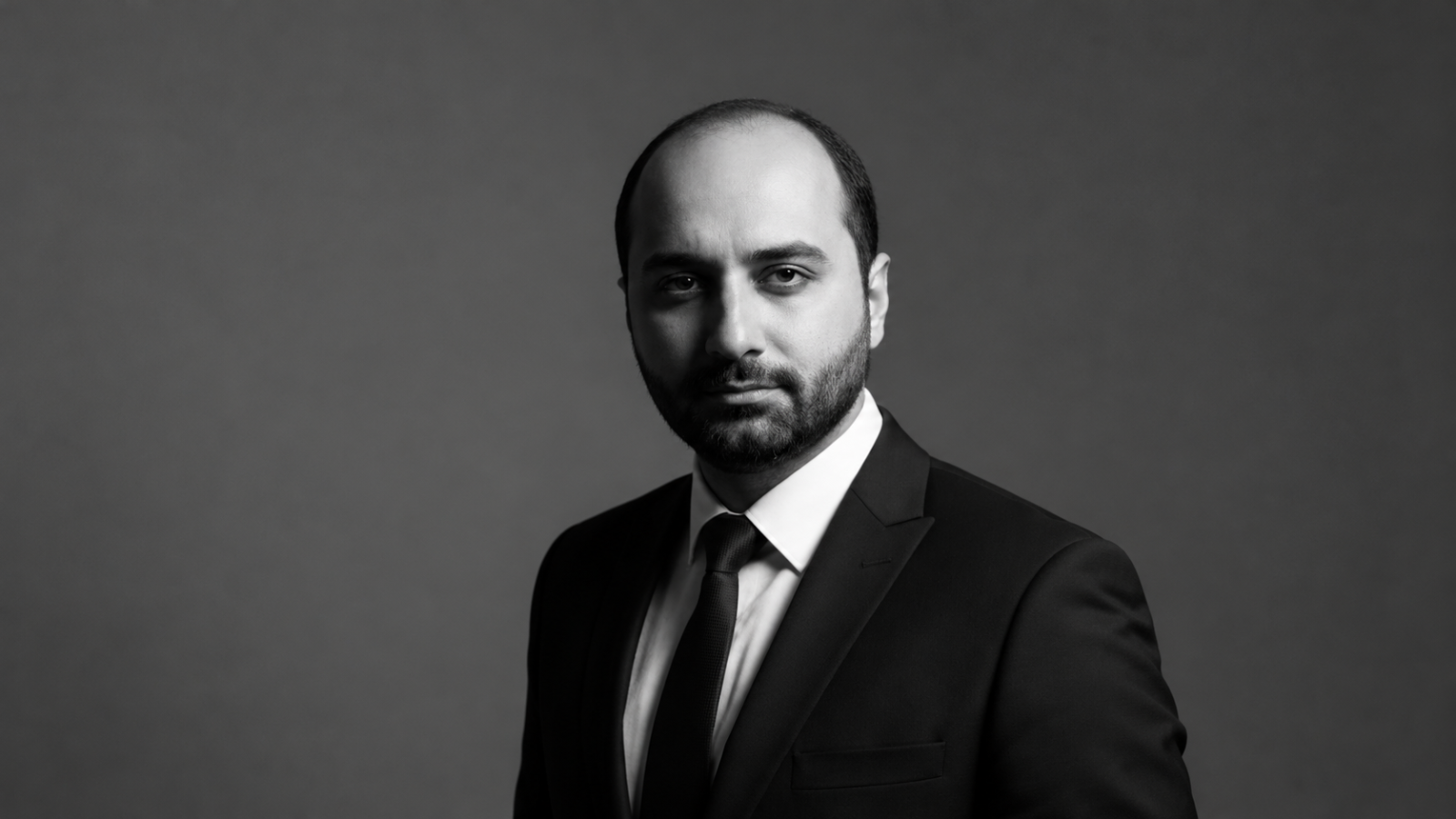
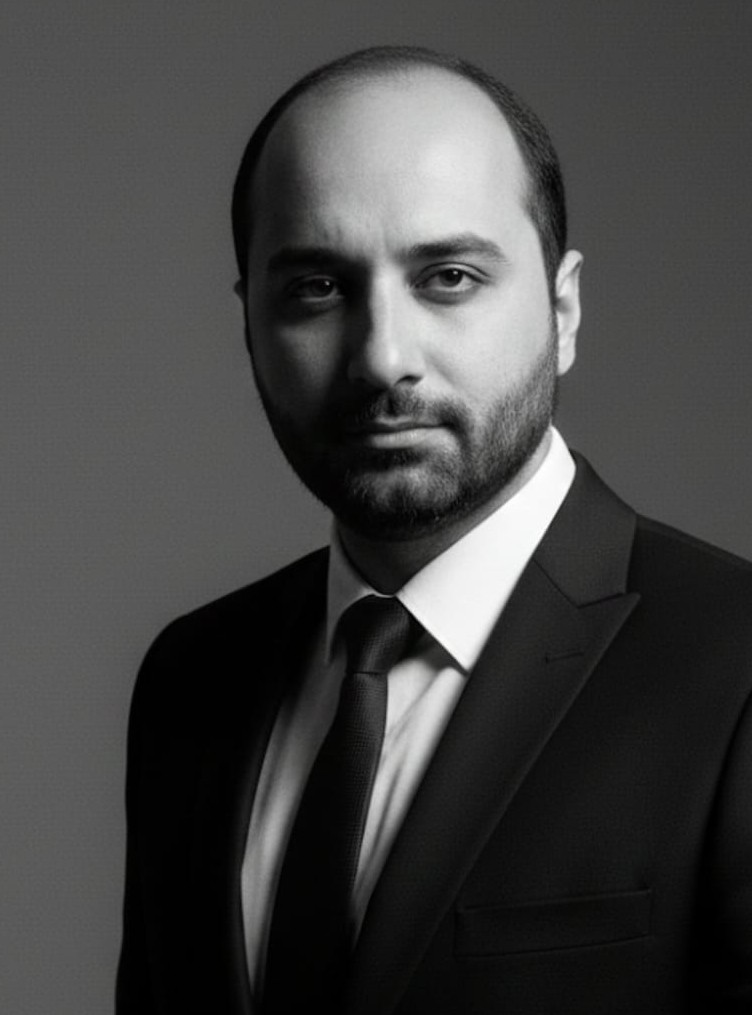
For more than 15 years, Alaa Alsamman has worked at the point where automotive sales, accessories, car care and aftersales meet the customer. He sayt with Masar Desk and shared his path and future destination with the Automotive Industry.
Across roles with Munif Al Nahdi, Balubaid, AlJomaih Automotive and AutoZone Balubaid, he built and developed accessories and car-care businesses, created additional revenue streams around the vehicle sale, worked with authorized service providers and saw firsthand how products move from Brands and distributors through dealerships and sales teams before finally reaching the customer.
That experience also exposed a recurring weakness in the traditional model: while every participant in the chain has a commercial role, the customer at the end of it may have very little visibility into who is authorized, whether a product is genuine, why one option costs more than another, what warranty actually applies, or who remains responsible when something goes wrong.
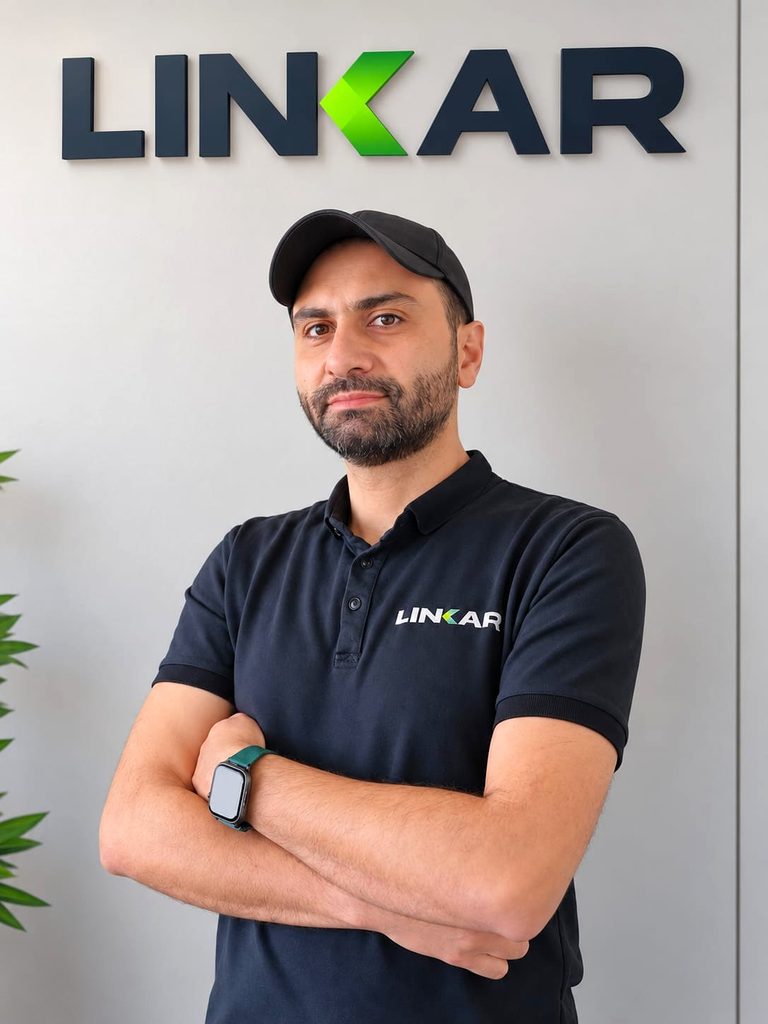
Those observations eventually became the foundation for LINKAR launching in Q1 2027, the digital car-care platform Alaa conceived and now leads as Managing Director.
In this interview for Masar Magazine, Alaa discusses the evolution of automotive accessories and car care in Saudi Arabia, the commercial realities behind the traditional distribution model, why he believes greater transparency is needed, and his ambition to build LINKAR into “your trusted link to car care.”
Your career has been closely connected to automotive accessories, car care and aftersales for more than 15 years. How did that journey begin, and how has the business changed during that time?
Alaa: My career has always been very close to the customer and to the commercial side of the automotive business.
I started working in accessories at a time when a lot of automotive companies still looked at accessories mainly as an additional department rather than a serious revenue stream. Over the years, I worked on building and managing accessories businesses at Munif Al Nahdi, Balubaid, AlJomaih Automotive and later AutoZone Balubaid.
In many of those roles, the challenge was not simply selling an accessory. It was building a complete business around it selecting products, deciding what should be OE and what should be aftermarket, creating packages, pricing them properly, working with suppliers and service providers, training sales teams and finding the right moment in the customer journey to offer the product.
Car care gradually became an important part of that model as well. Window film, nano ceramic, PPF, detailing and similar services became very strong upsell opportunities.
What has changed is that the customer is now much more informed. Customers compare prices online, research Brands, read reviews and ask more questions. The old model where somebody simply tells the customer, “This is the best option,” is becoming less effective.
You have created or rebuilt accessories businesses in several major automotive companies. What did that experience teach you about generating additional revenue in aftersales?
Alaa: The biggest lesson is that accessories and car care work best when they are treated as part of the customer journey, not as random products sitting on a shelf.
At Munif Al Nahdi, I was building the accessories business almost from scratch and expanding the offering beyond traditional parts. At Balubaid, we created an accessories function specifically to increase aftersales and upselling income.
At AlJomaih, the scope became much larger. We developed accessories and add-on packages for cars and trucks, combining OE and aftermarket products. We also incorporated car-care services from authorized service providers, including window film and nano ceramic.
Later, at AutoZone Balubaid, we expanded further into car-care packages, impulse-buy products, window film, nano ceramic and PPF.
The product itself is only one part of the equation. You need the right product, at the right price, offered at the right moment, through the right channel.
Most importantly, the customer has to understand why he is buying it.
Having worked inside dealerships, distributors and accessories businesses, what did you learn about how the distribution system really works behind the scenes?
Alaa: What looks simple to the customer can involve a long commercial chain.
You may have the Brand Owner, then the authorized distributor or agent, then a dealer or reseller, then a service provider or installer, and finally the salesperson dealing with the customer.
Every layer has a legitimate role, but every layer also has its own commercial objectives.
The Brand wants to protect positioning. The distributor wants volume. The dealer needs margin. The branch has targets. Salespeople may have incentives. The installer has to make money on the job.
There is nothing wrong with businesses making money.
The problem starts when the customer cannot see those relationships.
The customer may believe he is receiving completely independent advice when the recommendation can also be influenced by stock, targets, margin or commission.
That is where transparency becomes important.
Do sales targets, corporate structures and commission systems sometimes influence what customers are advised to buy?
Alaa: Of course they can.
Anybody who has spent time in sales understands that incentives influence behavior.
If one product gives a salesperson a better commission, another helps clear stock, or the company is pushing a particular Brand that month, naturally that can influence what gets promoted.
Corporate structures can create the same issue in a different way. Targets are passed down through several levels; pressure increases and eventually somebody at the front line has to deliver the number.
The customer normally does not see any of that.
He simply hears, “This is what I recommend.”
And often he has no easy way to verify whether that recommendation is genuinely the best option for his car or simply the best commercial option for the person selling it.
When that happens, who ultimately carries the risk?
Alaa: Too often, the customer.
He may pay more than necessary. He may receive something different from what he thought he was buying. He may be told that a product is original or a provider is authorized without having an easy way to confirm it.
Warranty is one of the clearest examples.
At the point of sale, everybody talks about warranty.
The real question comes two or three years later when the customer needs it.
Is the provider still there? Was the product registered? Was the installer authorized? Does the Brand recognize the claim? Who is responsible?
The customer should not need to become an investigator just to understand who stands behind something he already paid for.
Was that what eventually led you to the idea for LINKAR?
Alaa: Yes.
LINKAR did not come from looking at the market from the outside and deciding we needed another app.
It came from years spent working inside the existing system.
I had created accessory programs, developed car-care packages and dealt with Brands, distributors, dealerships, sales teams and service providers. I understood why every party behaved the way it did.
But I kept seeing the same gap.
The customer was at the end of the chain, but there was no neutral digital layer connecting all that information back to him.
He needed somewhere he could understand the product, compare options, see who is authorized, understand the warranty, select a provider and retain a record of what he purchased.
That became the basis of LINKAR.
The idea was never to replace the industry.
It was to connect it properly.
If you had to explain LINKAR to a car owner in one minute, what is it?
Alaa: LINKAR is a digital platform connecting car owners with trusted car-care Brands, authorized distributors and qualified service providers.
But I do not see it as simply a booking platform.
Imagine you want PPF, window tinting, ceramic coating or another car-care service.
Today, you might search Instagram, Google, WhatsApp and several different shops. Everybody has a different Brand, price, specification and warranty.
With LINKAR, you start with what your car needs.
You discover the options, compare the product, specification, price, provider, location, ratings and warranty information, and better understand who is behind the product and who is providing the service.
Then you choose, purchase or book and keep the relevant information connected to that transaction.
Instead of depending only on what one salesperson tells you, the customer has clearer information before making the decision.
That is what LINKAR is designed to become:
Your trusted link to car care.
Some might assume LINKAR is trying to cut out distributors, dealers or service providers. Is that the objective, and how does LINKAR change the position of the customer?
Alaa: No. The objective is not to eliminate legitimate parties. The Brand Owner, distributor, dealer and service provider each have an important role.
What we want to reduce is unnecessary opacity and the influence of layers that add no real value to the customer.
If a product comes through an authorized distributor, that relationship should be visible. If a service center is authorized by the Brand, that should be clear. If a provider has passed LINKAR’s own quality requirements, the customer should understand that as well.
The same applies to warranty.
LINKAR is being built so that partners do not simply sign an agreement and automatically become active. Depending on the partner, we verify relevant company information, authorization, products, warranty procedures and other requirements. Service-provider locations also go through quality and accreditation assessment.
The customer transaction should then retain important information: what was purchased, which specification, which provider completed the work and what warranty applies.
LINKAR also provides a further customer-support layer and, where applicable, an additional LINKAR warranty.
So we are not removing the ecosystem.
We are making the ecosystem more visible and accountable to the customer.
If LINKAR increases transparency, what is the commercial reason for Brands, distributors and service providers to participate?
Alaa: Transparency should benefit companies that are doing things properly.
A good Brand benefits when customers can recognize genuine products.
An authorized distributor benefits when legitimate distribution channels are clearer.
A strong service provider benefits when customers can look at quality, accreditation and reviews instead of choosing only by the cheapest price.
There are also direct commercial opportunities.
Brands can run launches, promotions, cashback, coupons, packages or warranty programs.
Distributors can generate B2C demand and potentially build B2B sales with participating providers.
Service providers can receive new customers, join Brand campaigns, develop verified ratings and eventually purchase approved products through the LINKAR ecosystem.
The intention is not to move value from one party to another.
It is to build a better-structured ecosystem where the customer also gets a fair share of that value through transparency, choice and protection.
Where is LINKAR today, and what would a future seed investment be used for?
Alaa: Phase One is already covered.
That was important because I did not want LINKAR to remain an investor presentation waiting for somebody else to finance the first step.
We needed to build the foundation ourselves.
That includes the Brand registration, domains, office setup, platform, operating model, partner structure, agreements, onboarding processes, quality standards and the initial market-entry work. We also worked on integrations and the B2B side of the platform. Next we begun Brand inbounding, Customer journey facilitation and doing trials with service providers to make sure all the loops are closed.
The next funding conversation therefore becomes about acceleration rather than simply proving the idea exists.
A seed round would allow us to move faster in customer acquisition, service-provider expansion, bigger Brand and distributor onboarding, technology development and the strong Customer service and Marketing plan execution.
There is also the mobile experience, AI-supported comparison and recommendations, analytics, customer support and the operational team needed to support a growing network.
Raising money itself is not the objective.
The objective is to use growth capital to scale something that has already been built on a solid foundation.
How do you see LINKAR scaling beyond its first phase?
Alaa: Saudi Arabia is the priority.
The market itself is large enough to build considerable depth before thinking internationally.
First, we need to establish strong coverage, partner density and a consistent customer experience.
Then we can add more categories, more Brands, more distributors and more qualified service providers, while developing B2B procurement and deeper system integrations.
The underlying customer problem is not unique to one city or one country but our focus is to stay local for now as we understand the local market the best.
People everywhere ask similar questions:
Is this original?
Is the provider genuinely authorized?
Why does one option cost more?
What does my warranty actually cover?
Who helps me if something goes wrong?
If LINKAR can answer those questions consistently, then the model has the potential to scale.
After all those years in accessories and car care, how has your definition of a successful sale changed and what do you ultimately want LINKAR to change for the customer?
Alaa: A sale is easy to celebrate on the day somebody pays.
But that does not necessarily mean it was a successful transaction.
For me, success is when the customer receives what he thought he was buying, the product performs as expected, the installation is done properly, the warranty is clear and he knows where to go if something goes wrong.
That customer comes back.
He trusts the Brand and recommends the business.
With LINKAR, I want taking care of a car to become simpler.
The customer should not need ten WhatsApp conversations, five Instagram pages and three different salespeople just to understand what he is buying.
He should not have to wonder whether the product is genuine or whether a provider is really authorized.
He should understand why one option costs more than another, what warranty he receives and who stands behind him afterwards.
If LINKAR can create that clarity while helping good Brands, distributors and service providers grow, then we have created something valuable for the entire automotive car-care industry.
That is the idea behind LINKAR.
Your trusted link to car care.


Leave a Reply