

A new automotive consumer study points to changing buying habits in Saudi Arabia, with consumers placing greater emphasis on value, technology and the overall ownership experience when choosing their next vehicle.
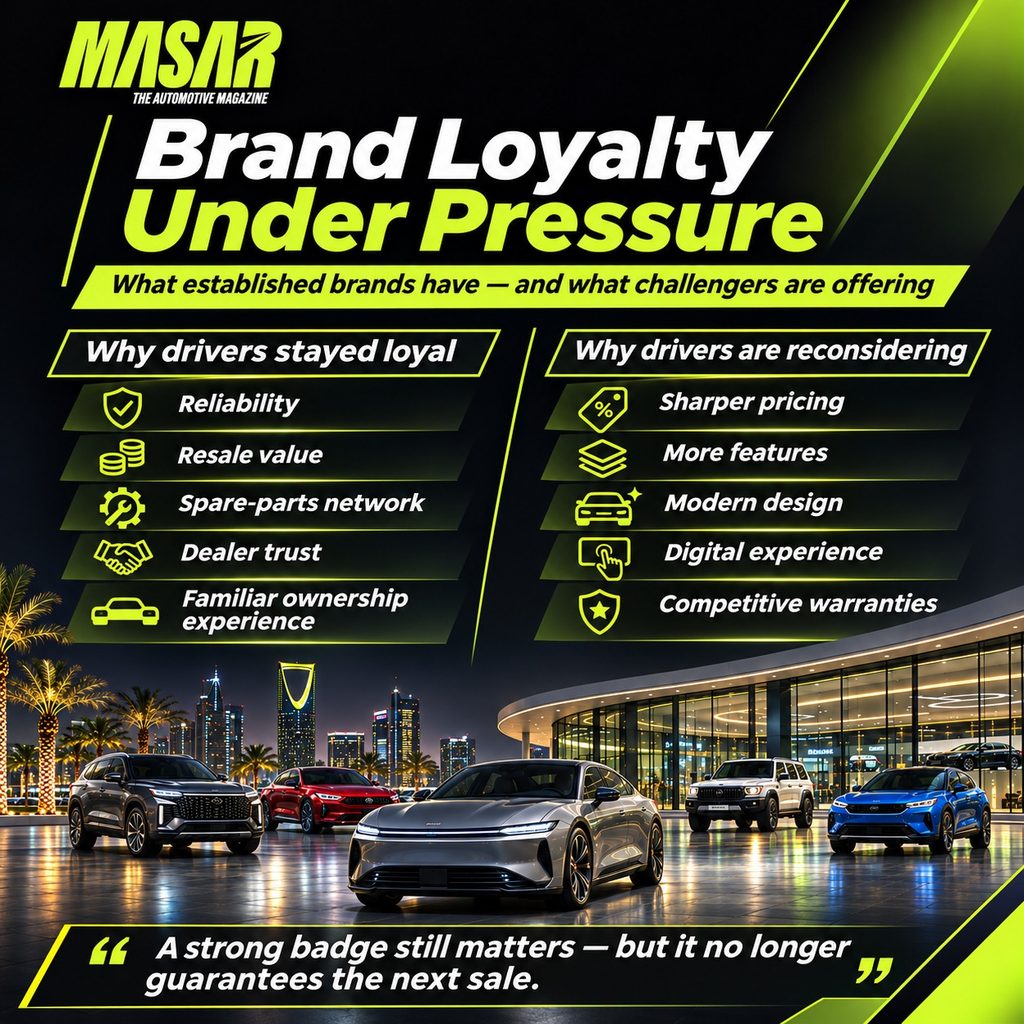
For decades, automotive brand loyalty has played a major role in Saudi Arabia’s car-buying culture. Established manufacturers built strong reputations through reliability, resale value, spare-parts availability and customer trust. Many maintained relationships with families across generations.
However, the Kingdom’s automotive market is changing.
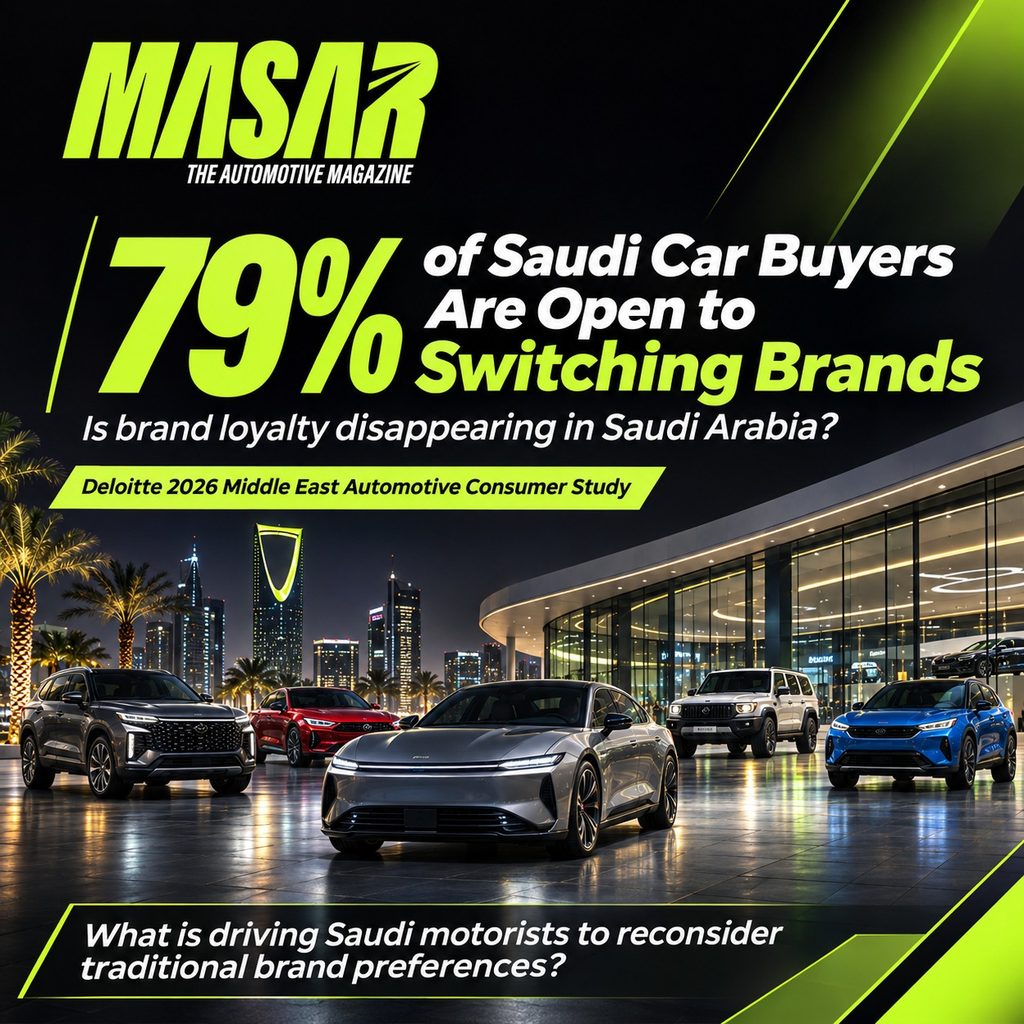
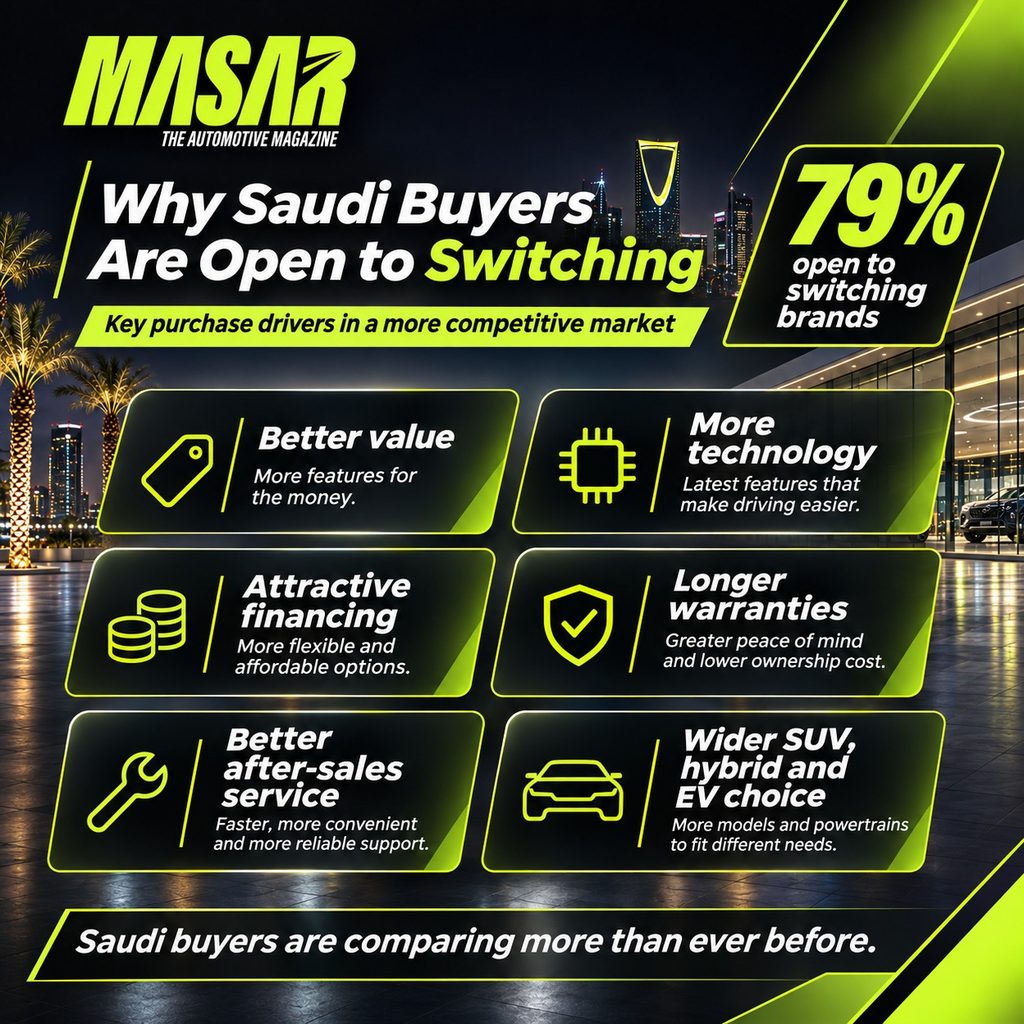
According to Deloitte’s 2026 Middle East Automotive Consumer Study, 79% of surveyed Saudi consumers are open to switching vehicle brands, placing Saudi Arabia among the markets with the highest willingness to consider alternative manufacturers across Europe, the Middle East and Africa.
The findings raise an important question for the automotive industry: Are Saudi consumers becoming less loyal to established brands, or are they simply becoming more selective about where they spend their money?
A Major Shift in Saudi Consumer Behaviour
Saudi Arabia’s automotive market has traditionally been dominated by established Japanese, South Korean and American manufacturers.
Brands such as Toyota, Hyundai, Nissan and Ford have built strong customer bases through extensive dealership networks, established service operations and widespread spare-parts availability.
Yet Deloitte’s findings suggest that a long-standing reputation may no longer be enough to guarantee a customer’s next purchase.
The study draws on more than 28,500 consumer responses globally, including a dedicated analysis of over 2,000 buyers across Saudi Arabia and the UAE. It highlights growing openness towards alternative vehicle brands.
In the UAE, 82% of consumers expressed willingness to switch brands, compared with 79% in Saudi Arabia.
This does not mean that eight out of ten motorists will leave their current manufacturers. Rather, it indicates that a significant proportion of consumers are willing to consider competing brands when choosing their next vehicle.
For manufacturers and dealerships, that distinction matters.
Price, Features and Value Are Changing the Equation
Today’s car buyers have access to more information, competing models and vehicle technologies than ever before.
Consumers can compare specifications, financing packages, safety ratings, warranties and ownership costs before visiting a showroom.
As competition increases, manufacturers must demonstrate the value of their vehicles rather than relying solely on brand recognition.
A customer who previously chose a particular model for its reputation may now consider an alternative offering more technology, advanced driver-assistance features, a longer warranty or more competitive financing.
However, the purchase price is not the only factor influencing decisions.
Deloitte’s regional findings indicate that approximately 40% of surveyed consumers could be encouraged to purchase sooner through the right offer. Extended warranties, zero-interest financing and comprehensive insurance were among the incentives identified.
This suggests that buyers are increasingly considering the wider financial and practical aspects of vehicle ownership.
Are Chinese Automotive Brands Changing the Market?
The growing presence of Chinese automotive manufacturers is adding another dimension to Saudi Arabia’s competitive landscape.
Brands including MG, Geely, Changan, Haval, Jetour and BYD have expanded the range of vehicles available to consumers, particularly in the SUV, technology-focused and value-oriented segments.
Many compete through extensive equipment packages, modern interiors, connectivity features and competitive pricing.
However, greater choice does not automatically translate into consumer trust.
Al Muraba Net’s 2025–2026 automotive consumer survey, which involved 5,020 participants, found that 46.9% wanted more time to be convinced about Chinese vehicles, while 28% expressed a negative perception.
A further 17.7% reported a positive perception, and 7.3% said they would consider purchasing one.
These findings point to a more complex picture than simple acceptance or rejection.
Chinese manufacturers may be attracting attention, but concerns about long-term reliability, resale value, spare-parts availability and after-sales support remain important considerations.
For established manufacturers, the challenge is not simply competing on price or features. They must also demonstrate that their traditional advantages continue to justify the customer’s investment.
Toyota and Hyundai Continue to Lead Sales, But for How Long?
Despite changing consumer attitudes, established manufacturers continue to perform strongly in Saudi Arabia.
Vehicle sales rankings for the first nine months of 2026 placed the Toyota Camry first with 25,290 units sold, followed by the Hyundai Accent with 22,622 and the Toyota Yaris with 20,621. The Hyundai Elantra also secured a place among the top four models.
These figures highlight the continued commercial strength of established manufacturers, particularly in the sedan segment.
However, current sales performance and future brand loyalty are not necessarily the same thing.
A manufacturer can maintain strong sales today while facing increasing competition for tomorrow’s customers.
The challenge for established brands will be turning their current market position into lasting customer relationships as buyers become more willing to explore alternatives.
The Showroom Still Matters in a Digital World
The automotive buying journey is also evolving.
Consumers increasingly begin their research online, comparing vehicles through manufacturer websites, automotive publications, video reviews and social media.
Yet physical dealerships continue to play an important role.
Deloitte’s study identifies trust in sales representatives as a leading factor in the vehicle purchasing experience across Saudi Arabia and the UAE.
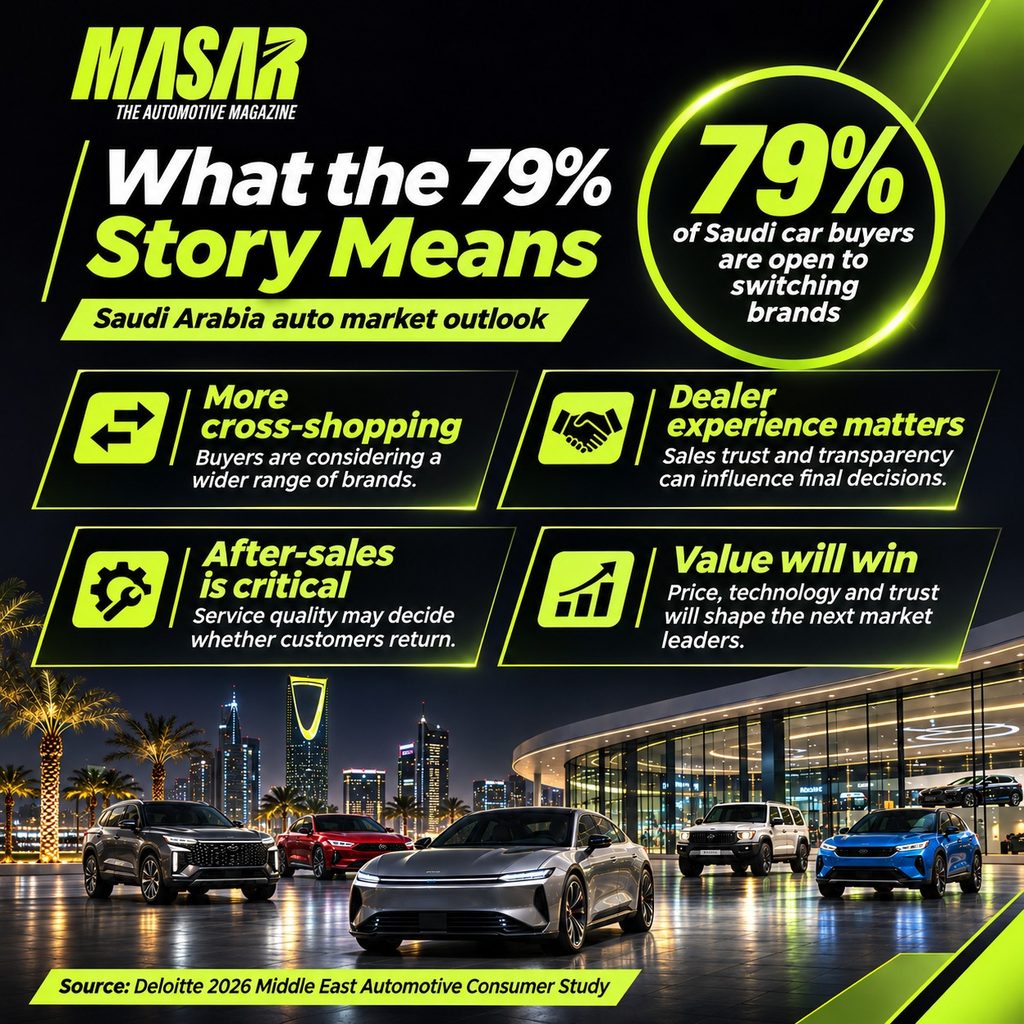
This suggests that digital platforms influence which vehicles customers consider, while dealerships remain important in helping them make their final decisions.
For dealerships, the opportunity lies in creating a more connected buying experience. Transparent pricing, knowledgeable sales representatives, accessible financing information and consistent customer communication can help turn online interest into completed purchases.
After-Sales Service Could Become the New Battleground
One of the biggest opportunities for automotive brands lies beyond the initial vehicle sale.
Customers do not evaluate manufacturers solely on what happens inside the showroom. Maintenance expenses, spare-parts availability, warranty claims, service turnaround times and overall customer support all contribute to their long-term perception of a brand.
Deloitte’s research indicates that authorised dealerships handle approximately 70% of servicing for new vehicles, but their share declines significantly as vehicles age.
This creates a challenge for manufacturers seeking to retain customers over multiple ownership cycles.
A buyer who is satisfied with the initial purchase may still reconsider the brand if the subsequent service experience fails to meet expectations.
On the other hand, reliable servicing, clear communication and transparent maintenance costs can become important competitive advantages.
As vehicle specifications become increasingly competitive, the overall ownership experience may prove just as influential as the vehicle itself.
Is Brand Loyalty Really Disappearing?
The emerging evidence does not necessarily suggest that brand loyalty is disappearing. Instead, it indicates that loyalty is becoming more conditional.
Saudi consumers may continue to value manufacturers with established reputations for reliability, durability and resale value. However, they are increasingly willing to compare these strengths with alternative offerings.
A familiar badge may attract attention, but it no longer guarantees a sale.
For newer manufacturers, this creates opportunities to establish themselves through competitive products, customer service and consistent ownership experiences.
For established brands, it increases the importance of adapting to changing expectations while maintaining the trust they have built over decades.
What Comes Next for Saudi Arabia’s Automotive Market?
Saudi Arabia’s automotive sector is entering a period in which changing consumer expectations are becoming an increasingly important competitive factor.
As more manufacturers compete across petrol, hybrid and electric vehicle segments, buyers have greater freedom to choose vehicles that meet their individual needs.
The Deloitte study suggests that Saudi motorists are increasingly open to reconsidering their automotive preferences.
For manufacturers and distributors, the implications are clear: market leadership can no longer depend on reputation alone.
Product quality, competitive value, transparent pricing, strong after-sales support and customer trust will remain central to attracting and retaining buyers.
The next chapter of Saudi Arabia’s automotive market may not be defined by which brand has the strongest history, but by which brand delivers the strongest overall ownership experience.
Sources: Deloitte 2026 Middle East Automotive Consumer Study; Al Muraba Net 2025–2026 Automotive Sector Survey; Saudi vehicle sales rankings for the first nine months of 2026.

Leave a Reply