


Revealed at Monterey Car Week 2026, the McL 6GT reimagines the M6GT for a new era — with V8 power, carbon-fibre construction and McLaren’s first authentic manual transmission since the legendary F1

Monterey, California: More than six decades after Bruce McLaren imagined a road-going supercar that was never fully realised, McLaren Automotive has unveiled a modern interpretation of that vision.
The McLaren McL 6GT, revealed at the 2026 Monterey Car Week, is a striking concept that connects the company’s earliest road-car ambitions with its vision for the future. Inspired by the McLaren M6GT — the road-going machine conceived by Bruce McLaren in the late 1960s — the new McL 6GT celebrates an increasingly rare idea in the modern supercar world: a deeply mechanical and tactile connection between driver and machine.
And at the heart of that experience is something McLaren has not offered since the legendary McLaren F1 of 1992: an authentic manual transmission.
The McL 6GT is more than a heritage-inspired concept. It also previews a new category of highly exclusive McLaren supercar, with a production version scheduled to arrive in 2028.

A Dream Reimagined
The story of the McL 6GT begins with Bruce McLaren’s original M6GT, a road-going interpretation of the M6A Can-Am racing car.
The M6GT represented an ambition to translate McLaren’s racing expertise into an uncompromising road car. However, Bruce McLaren’s vision was never fully realised during his lifetime.
Now, McLaren has returned to that unfinished chapter and imagined what might have happened if the original idea had continued evolving through six decades of engineering innovation.
“The McLaren McL 6GT imagines what our inspirational founder had wished to complete but with six additional decades of innovation and passion woven through every element, creating a modern icon of driver connection,” said Nick Collins, Chief Executive Officer of McLaren Automotive.
“It is symbolic of the bold, provocative and hugely exciting future that we are preparing to realise.”
The result is a car that does not attempt to simply recreate the past. Instead, it uses McLaren’s heritage as the foundation for an entirely new interpretation of the supercar.
The Return of the Manual McLaren
Perhaps the most significant feature of the McL 6GT is its transmission.
For the first time since the McLaren F1, the company has developed a car around an authentic manual gearbox, sending power to the rear wheels.
In an era increasingly defined by dual-clutch transmissions, hybrid systems and digital driving interfaces, the decision represents a deliberate move towards mechanical engagement.
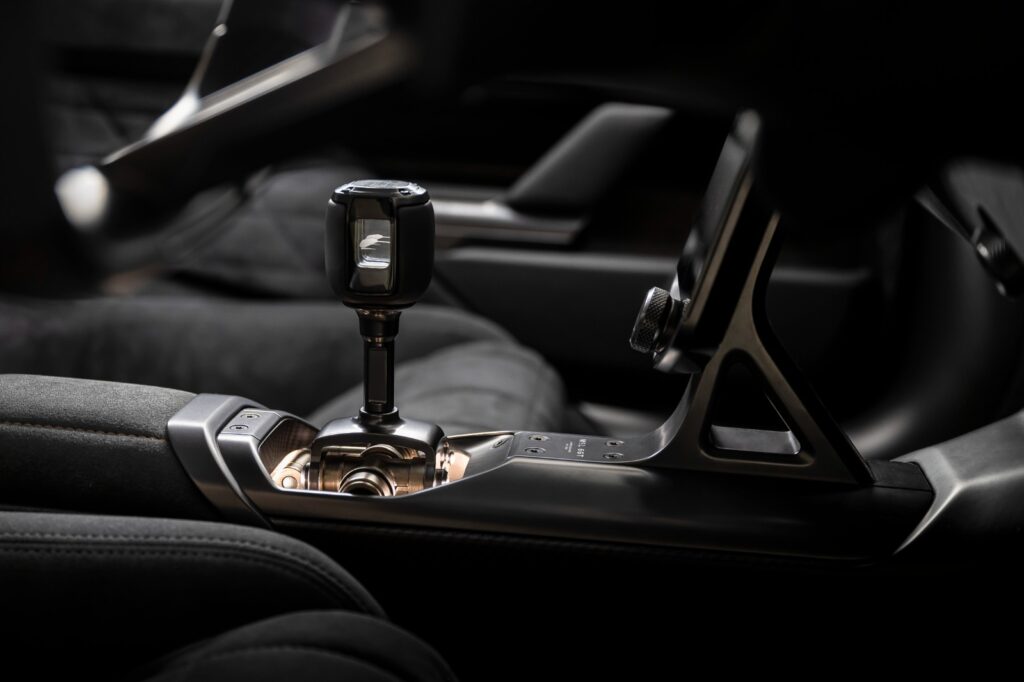
Every gear change is intended to be a physical part of the driving experience. The gearstick itself has been designed with careful attention to feel and shift movement, while its upright incorporates a three-dimensional Speedy Kiwi, a nod to one of McLaren’s earliest pieces of brand iconography.
The focus on tactility continues throughout the car.
Hydraulic steering, physical switchgear and visible engineering elements have all been chosen to create a more direct relationship between the driver and the machine. Knurled machined aluminium controls further reinforce the analogue character of the cockpit.
This is a supercar designed not to filter the driving experience through software, but to make every input feel deliberate and meaningful.
Heritage, Without Nostalgia
The McL 6GT draws heavily from the proportions and design philosophy of the original M6GT, while avoiding a literal retro interpretation.
It sits exceptionally low and wide, with a low nose that recalls the stance of the M6A Can-Am racer. The body is defined by clean, uninterrupted surfaces that flow from the front of the car towards a distinctive Kammback rear.
The cabin appears integrated into the body rather than simply placed on top of it, creating a single, cohesive form inspired by the low-drag aerodynamic thinking of 1960s sports prototype racing cars.
Several details create direct connections to McLaren’s past.
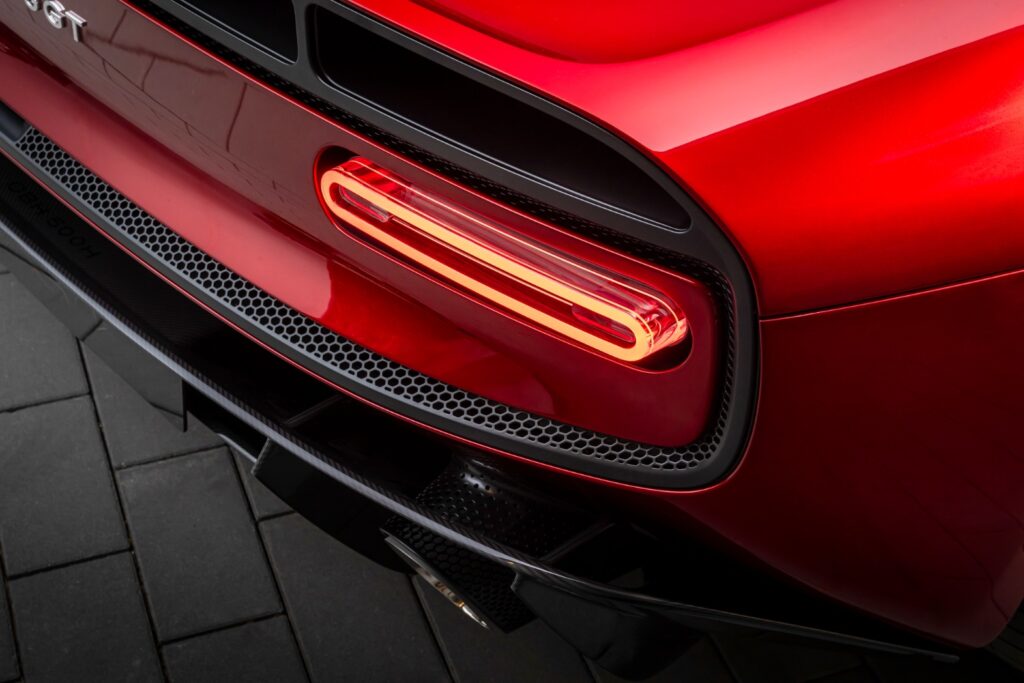
A distinctive Racing Loop motif, inspired by the original M6GT’s taillights, is integrated into the car’s exterior airflow architecture. Bruce McLaren’s original M6GT number plate has been reimagined as a subtle tone-on-tone graphic treatment, while his signature appears in the engine bay.
The Speedy Kiwi is also discreetly etched into the fuel filler cap.
Inside, heritage is interpreted with the same contemporary approach. Boxed quilting has been reworked for a modern cockpit, while the digital instrumentation aims to combine contemporary functionality with the visual clarity and emotional character associated with the original car.

Carbon Fibre at Its Purest
While the inspiration may come from the 1960s, the engineering beneath the McL 6GT is thoroughly modern.
The car is built around a state-of-the-art carbon-fibre monocoque, paired with a full carbon-fibre body. Lightweight construction has long been central to McLaren’s identity, both on the race track and on the road, and the McL 6GT continues that philosophy.
The extensive use of carbon fibre is intended to support an exceptional power-to-weight ratio while contributing to the car’s purity of purpose.
Exposed gloss carbon fibre inside the cabin creates another link to the original M6GT and McLaren’s racing heritage, while serving as a reminder that the material is more than a design statement. Every element of the car has been developed around performance, lightweight engineering and driver connection.

From Concept to Production
The McL 6GT also signals a broader shift in McLaren’s future product strategy.
The concept is intended to create space for a new type of highly exclusive supercar that sits beyond McLaren’s existing core and expanded portfolios. A production version is planned for 2028, turning the concept’s philosophy of analogue engagement, lightweight construction and heritage-inspired design into a road-going reality.
The journey towards the McL 6GT has already included another significant tribute to Bruce McLaren’s original vision. Earlier this year, McLaren Special Operations meticulously assembled a one-off version of the original M6GT, presenting it at the Goodwood Festival of Speed.
The McL 6GT takes that celebration further.
Rather than simply looking back at what might have been, it asks what Bruce McLaren’s original idea could become today.
With V8 internal-combustion power, rear-wheel drive, a full carbon-fibre structure and a manual transmission, the McL 6GT stands apart from the increasingly digital direction of the modern supercar.
It is a car built around the idea that technology should enhance the experience of driving — not replace it.
And if the production version remains faithful to the concept revealed at Monterey, McLaren may be preparing to offer something increasingly rare: a modern supercar that looks to the future by putting the driver firmly back at the centre of the machine.



Leave a Reply